

- This event has passed.
March 4, 2025 @ 7:30 pm - 9:30 pm
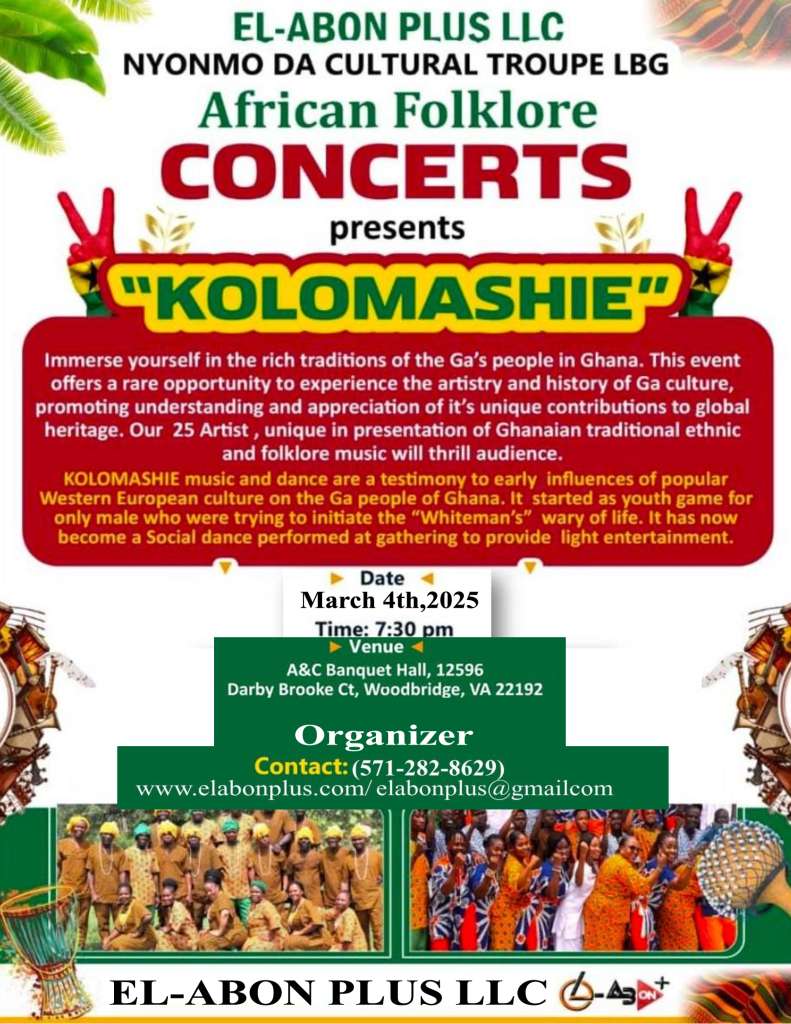
Kolomashie is a traditional dance and musical performance of the Ga-Adangbe people of Ghana, particularly associated with the coastal communities of the Greater Accra Region. It holds significant cultural and historical importance and is performed during festivals, social gatherings, and funerals.
Rooted in Ga cultural heritage, Kolomashie celebrates bravery, unity, resilience, and communal pride through energetic dance movements, rhythmic drumming, traditional songs, and audience participation.
Key Features of Kolomashie
1. Historical Background
Kolomashie is traditionally associated with war dances that inspired warriors and celebrated victories. Over time, it evolved into a recreational and ceremonial performance representing bravery, unity, and cultural identity.
2. Purpose and Cultural Significance
Kolomashie serves several cultural and social purposes, including:
- Honouring ancestors and celebrating communal achievements.
- Promoting unity among the Ga-Adangbe people.
- Providing entertainment during festivals, social gatherings, and cultural celebrations, including Homowo.
3. Musical Accompaniment
Kolomashie music is driven by traditional drums and percussion instruments that create its distinctive, lively rhythms. These may include:
- Gome drum: A large, box-shaped drum played as part of traditional musical performances.
- Atumpan and kpanlogo drums: Drums associated with Ghanaian traditional and contemporary cultural music.
- Bells and rattles: Instruments that add rhythm, texture, and depth to the music.
4. Dance Movements
The dance features energetic, coordinated movements involving the arms, legs, and torso. Dancers perform bold gestures and quick footwork in response to the drumming, creating a captivating display of rhythm, coordination, and cultural expression.
5. Traditional Costumes
Performers wear traditional attire, which may include locally woven fabrics such as kente or plain cloth. Beads, headgear, sashes, and other accessories complement the outfits, adding colour and cultural significance to the performance.
6. Chants and Songs
Kolomashie features call-and-response singing, in which a lead singer introduces a phrase and the group responds. The songs may recount stories, celebrate achievements, preserve cultural knowledge, or communicate moral lessons.
7. Community Participation
Community involvement is an essential part of the performance. Spectators are encouraged to clap, sing along, and sometimes join the dancing, creating an engaging atmosphere that brings performers and audiences together.
8. Symbolism and Heritage
Kolomashie represents strength, resilience, unity, and cultural pride. Through its music, dance, chants, and communal participation, it helps preserve and transmit the traditions and history of the Ga-Adangbe people across generations.
Conclusion
Kolomashie remains an important expression of Ga cultural heritage. Through its vibrant music, energetic dancing, traditional costumes, and community participation, it celebrates the identity and history of the Ga-Adangbe people while fostering unity and keeping cultural traditions alive.